
The basic moves in kettlebell training can take a long time to master. A simple deadlift is a coordination of dynamic and static strength in your entire body. In order to deadlift weight properly, one must get their feet flat, hips moving, back straight, shoulders engaged and time in breathing as well. For anyone that has never practiced functional exercise before, this can be quite challenging to do at first. I often compare it to driving a standard transmission car, where every push of the clutch pedal and shift of the gear must be thought about, until eventually you become unconsciously competent.
Once moving beyond the deadlift, the kettlebell swing can require a similar adaptation. However, even though it is similar to it’s predecessor, it still has a few differences. The primary difference is that a kettlebell swing is front to back, where as a deadlift is an up and down movement of weight. In order to develop the most efficient movement, consistency and constant practice are very important.
In today’s lesson, I am teaching you how to use the deadlift to help with your kettlebell swing and also how a heavy kettlebell can help perfect the swing movement. Often, people that are intimidated or unsure of themselves when learning the swing for the first time tend to use too light of a kettlebell. While I am not suggesting that you do anything you aren’t comfortable with, this can make the move very difficult to learn. It isn’t until the person develops enough confidence with a lighter weight and eventually moves up in weight that the swing becomes as efficient as possible.
Contrast training is a method that teaches a specific movement using heavy resistance in the strength phase rather than a lower weight for the same movement in the power phase. Using this technique, you can go from a heavy deadlift to a medium weight kettlebell for the swing. This will recruit your strong posterior chain muscles, the glutes and hamstrings, and help you make a medium weight bell feel very light. Until someone learns to swing a heavy swing (proportionate to their strength and size) it is highly unlikely they will develop excellent technique. When using too light of a weight I often see people using their arms and shoulders to lift the bell or try to slow it down as it drops which can initiate the bend movement too early, allowing the bell to arc too low. It isn’t until the right weight is used that the person allows their hips to both accelerate and decelerate the bell and stop the all too common premature squat movement.
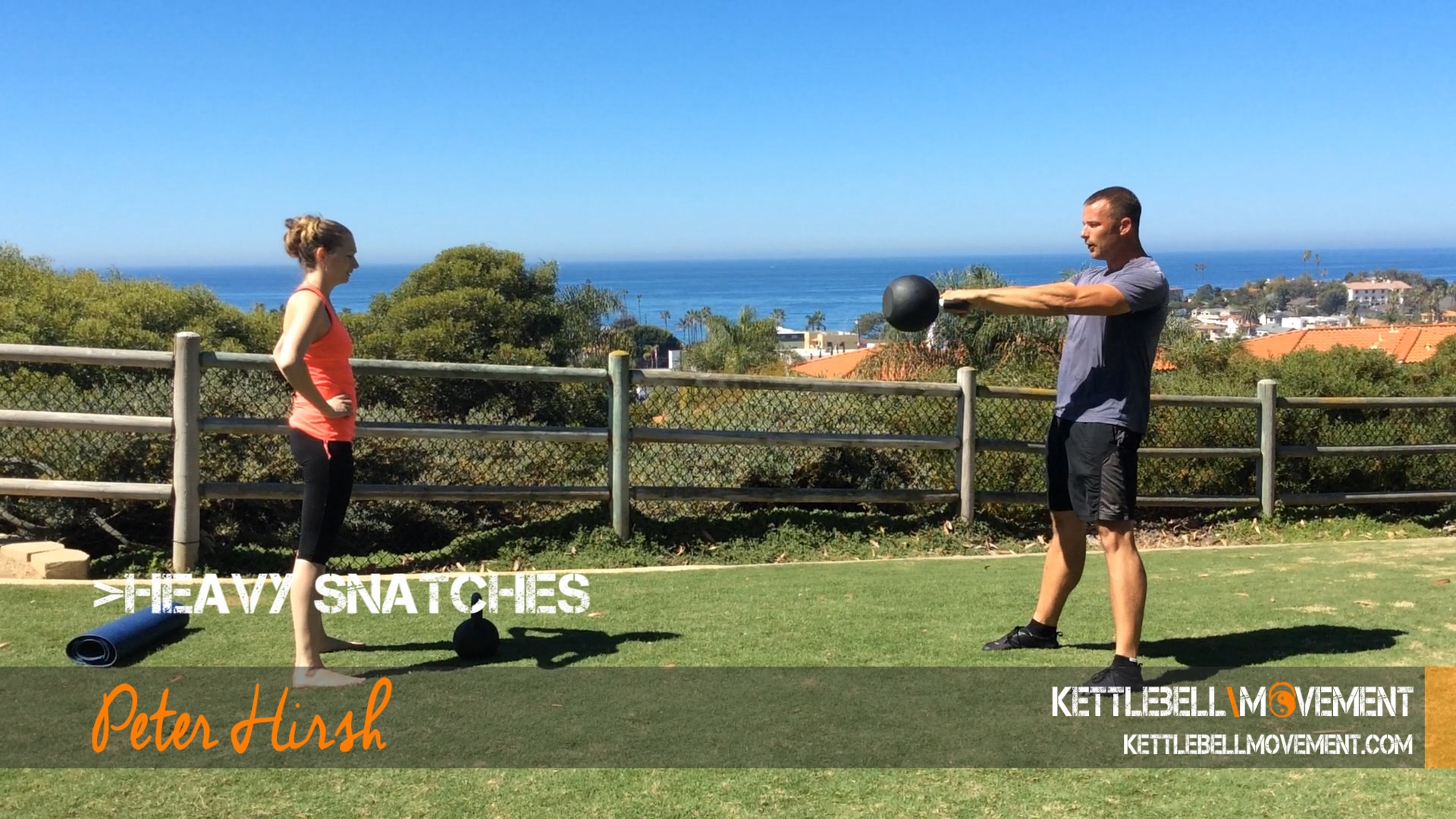
In today’s video, you will see me taking Sammy through a quick contrast set (or two) of deadlift and swings to help develop excellent form. The weight she was swinging was almost half her bodyweight, quite the challenge for someone that hasn’t been kettlebelling for very long! Observe how the heavy bell creates fluidity and helps her learn the exercise. We keep the reps low, so as to stay safe and minimize fatigue, which is the best way to learn these moves at first. Let’s move up in reps only after the motor pattern has been cast in stone. Thank you for watching today, I hope you enjoy the lesson and that you are able to improve your ability using these techniques.
Peter Hirsh



Leave a Reply