7 Primal Movements For Fitness:
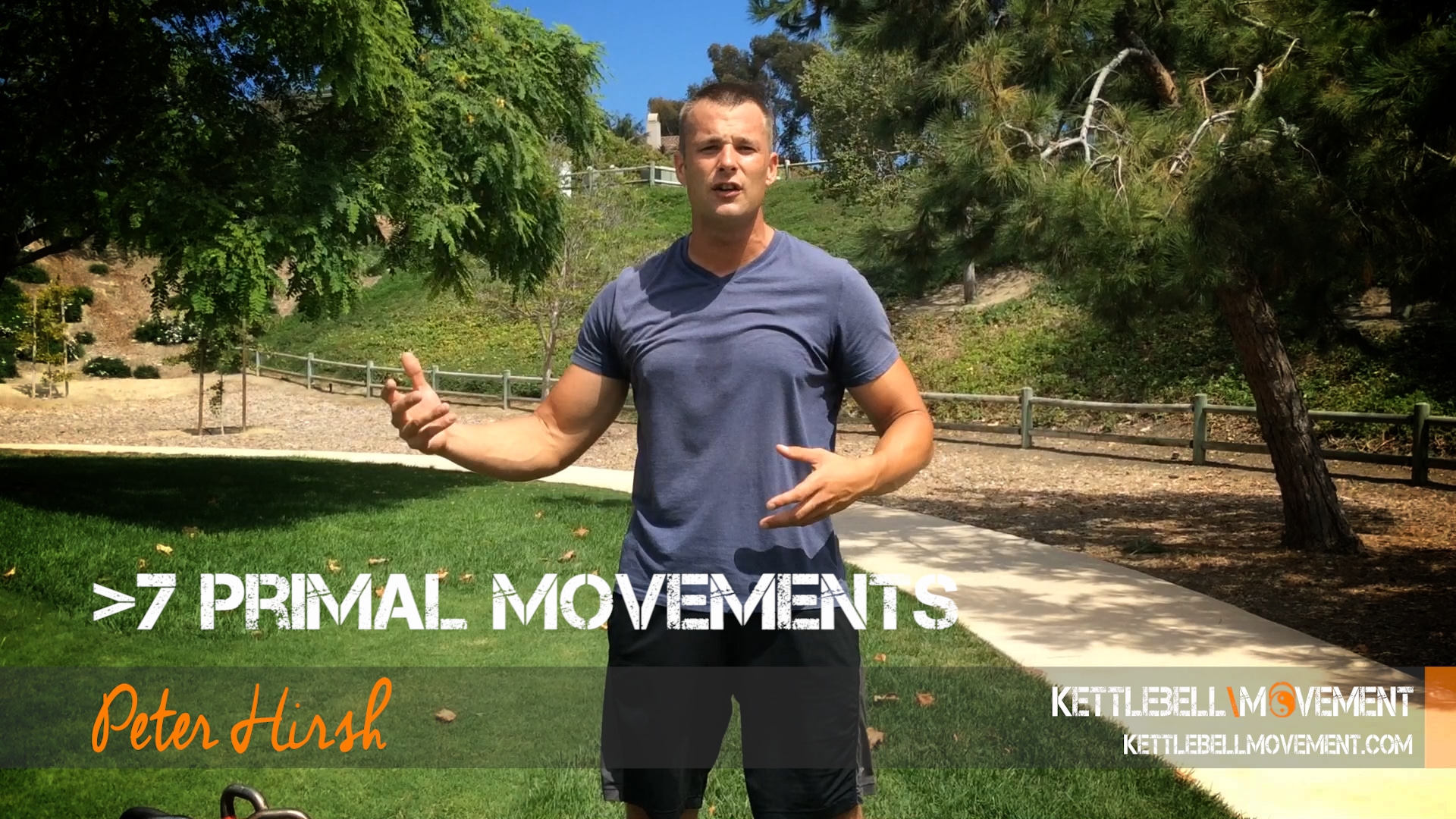
Today I am going to talk about the 7 primal movements. Regardless of the equipment available to you, if you use these motions in the gym you are guaranteed great results. Training the seven primal movements will help you create strength and flexibility in all ranges of motion. It will keep you focused, build coordination, and improve your cardiovascular strength. I do not advocate the muscle isolation machines and exercises that were adopted by bodybuilders for anyone with a goal of health. Muscle isolation develops useless strength in the real world. It will cause you to lose range of motion and pound away at your joints. Which, in my opinion, misses the point of exercise entirely.
What is the point in exercise? Well, amongst many other benefits, exercise helps create body unity.
There are 7 primal movements for fitness that are the basis for all human movement. When you prepare your workout plan, instead of training individual muscles, train these movements.
Bend to extend – This is a hips back movement, loading into your legs with a flat back. Keep your feet flat and forward. This can be performed bodyweight or in dozens of other variations. This movement works your glutes, back of your legs (hamstrings), and your lower back.
Squat – This movement is downward with your hips. Keep your bodyweight in its neutral gravity line with your back flat. Over time develop the range of motion that will take you to “rock bottom.” At rock bottom the forward lean is minimized, try to keep your torso almost upright. This movement is all about strength and flexibility and works every muscle in your legs and core.
Lunge – This is a stabilization and balance training exercise. When performed properly it is great for lengthening tight hips and creating pelvic floor strength. Lunges will make your quads and hip flexors sore from the long range of motion and will require more core strength to stand up out of than the squat and deadlift.
Twist – All movement begins with rotation, twisting through your core is extremely important for strength and flexibility. Every step you take has rotation in the thoracic spine. For injury prevention train this movement in your practice. It will keep your core strong and mobile, unify your body and tone up those midsection muscles!
Push – This is your upper body muscles pushing things in various directions. In the real world, you would have to do this frequently with many different objects and in many different forms. This movement trains your chest, shoulders and triceps differently depending upon the lift.
Pull – Your upper body muscles pulling weight toward you, referred to as a row, or pulling your bodyweight upward, like the pull up. This trains your back, biceps and grip. There is a version of pulling out there for everyone. Pulling can help correct the forward shoulders that have become so common among people from spending so much time at computers and iphones.
Gait – This means variations of walking, jogging, running and sprinting. If you train the previous six movements safely and effectively, it will set you up to have the posture, flexibility, strength and endurance to run. I often tell people, don’t run to get fit, get fit so you can run!
When you train opt for free weights and body weighted exercises and steer clear of one size fits all machines that spot train muscles. Unless your goal is to get very bulky, muscles isolation isn’t worth the drawbacks of loss of flexibility and excessive wear on your joints. By training full body free weight exercises, you will improve your health, become real world strong and reshape your body at the same time!



2 Comments
Kettlebell Movement | Lunge Progressions: 8 Variations Of The Lunge - Kettlebell Movement
Kettlebell Movement | Burn off the Turkey Kettlebell Circuit Workout - Kettlebell Movement