
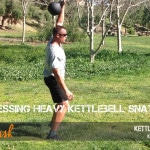
Welcome to Kettlebell Movement for a lesson on stretching. Today, I am going to demonstrate the most effective hip flexor stretch that I have ever seen. The basics of this stretch are consistent with many other hip flexor stretches; use one leg to put the pelvis into a slight posterior tilt and put the other hip into extension. The difference with this stretch is that your partner can bend the knee slowly, allowing you to dictate the exact intensity of the stretch. The fascia around the hip flexors travels past the knee and into the foot, that is why bending the knee increases the stretch. Even some of the muscles go from your pelvis to your femur and past the knee to the tibia. Watch the video carefully and see how to perform this stretch properly. If you are the one assisting your partner, it is very important that you listen to them and continue carefully. Bend the knee slowly, communicate clearly what you are feeling while being stretched.
The hip flexors are some of the most chronically tight muscles on people today, due to the amount of time we spend in hip flexion. Many of us drive to work, sit at a desk, drive home, sit on a couch and often, even sleep with our hip flexors in a shortened position. This results in chronic tightness in the front of the pelvis, pulling it down toward the femur. Similar to a see-saw, the hip acts as a pivot point that raises the pelvis up in the back. This is known as an anterior pelvic tilt. Over time this can cause severe low back pain and tightness and can also effect the shoulders and neck. Postural deviations such as this can often shut off the pelvic floor, the muscles that provide support for your internal organs, allowing for circulation and elimination of toxins. While that may sound like a severe reaction from tight hips, it is a fact that poor posture nearly always starts in the hips and causes a whole range of health problems.
This stretch will make your legs feel longer and lighter and can be used with self myofascial release, massage and dynamic range of motion to help lengthen tight muscles. However, try not to do this too often, one time a day is more than enough and over stretching a muscle can cause as many problems as a tight muscle can. Start slowly, see how your body responds after the first day and then determine how you feel. You may not need to perform this stretch at all if you aren’t tight in this area and should avoid it completely if you have a posterior tilting pelvis. Stretch and train intelligently and let your body guide you as you listen as closely as possible to everything it tells you.
Thank you for joining me,
Peter Hirsh


Leave a Reply