In this article, I will talk about fixing back pain using kettlebells as well as how to avoid back pain when using them. When the concept of training movement as opposed to muscle first hit the mainstream, many people criticized various exercises as bad for your back or shoulders.
Many people would approach me with this concern to which I would simply point out that there is nothing in this training that wouldn’t occur frequently in the real world. What I teach is how to develop strength and posture to prepare you for every day things such as picking objects off the ground and manipulating them with optimal efficiency.
It isn’t difficult to see that exercising and weight lifting in a way that is fully kinetic, in other words using your entire body, is safer and more appropriate for the vast majority of people than muscle isolation exercise. People quickly realized that this way of preparing our bodies for the real world was far more appropriate than sitting in chairs to make our legs, core and upper body stronger! This idea has changed the way the average person looks at weightlifting in the last ten years. These days, far fewer are the self proclaimed experts nay saying this proven workout methodology.
This doesn’t mean that you can’t hurt your back while kettlebell training or performing full body lifts, you must use proper technique. Generally, the number one cause of improper technique is overactive muscles, or muscle tightness. Keep in mind this is a product of an overactive nervous system not of shortened muscle fibers.
There are countless ways that overactive muscles can put excess strain on the back when lifting weights. Using progressively deeper range of motion, you can create mobility slowly, one rep at a time. This will allow you to develop mobility in basic movements such as a bend or squat without going so deep as to deviate form.
Causes of Back Pain
Lifting overhead with tight lats or shoulders is out of the question, lat stretching and exercises such as pull ups and pull overs can help. If you are experiencing back pain while using kettlebells, you should focus your mind on abdominal bracing. Abdominal Bracing is the act of engaging your pelvic floor as deeply as you can while focusing on shortening the distance between your rectum and your belly button. Pull your pelvic floor up, and squeeze the big outer unit muscles like you are bracing for a punch. It isn’t sucking in the gut, or what people refer to as the drawing in maneuver, bracing stabilizes your core much more deeply.
Tight Hip Flexors
Tight hip flexors are a major source of lower to mid back pain as they have a tendency to put an anterior tilt to your pelvis. A condition where the front of the pelvis sits lower than the back. Think of a see saw that has a much larger person on one end than the other. The hip flexors are pulling the pelvis down in the front, as it pivots on the axis (the hips) and as a result the pelvis moves up in the back.
Exercises such as deadlifts can be great to strengthen the hip extensors, and in this analogy, put someone just as big on the other side of that see saw to help balance things out. Hip flexor stretching and when exercising, lunges, are a great way to lesson the tension that is causing the tilt to happen.
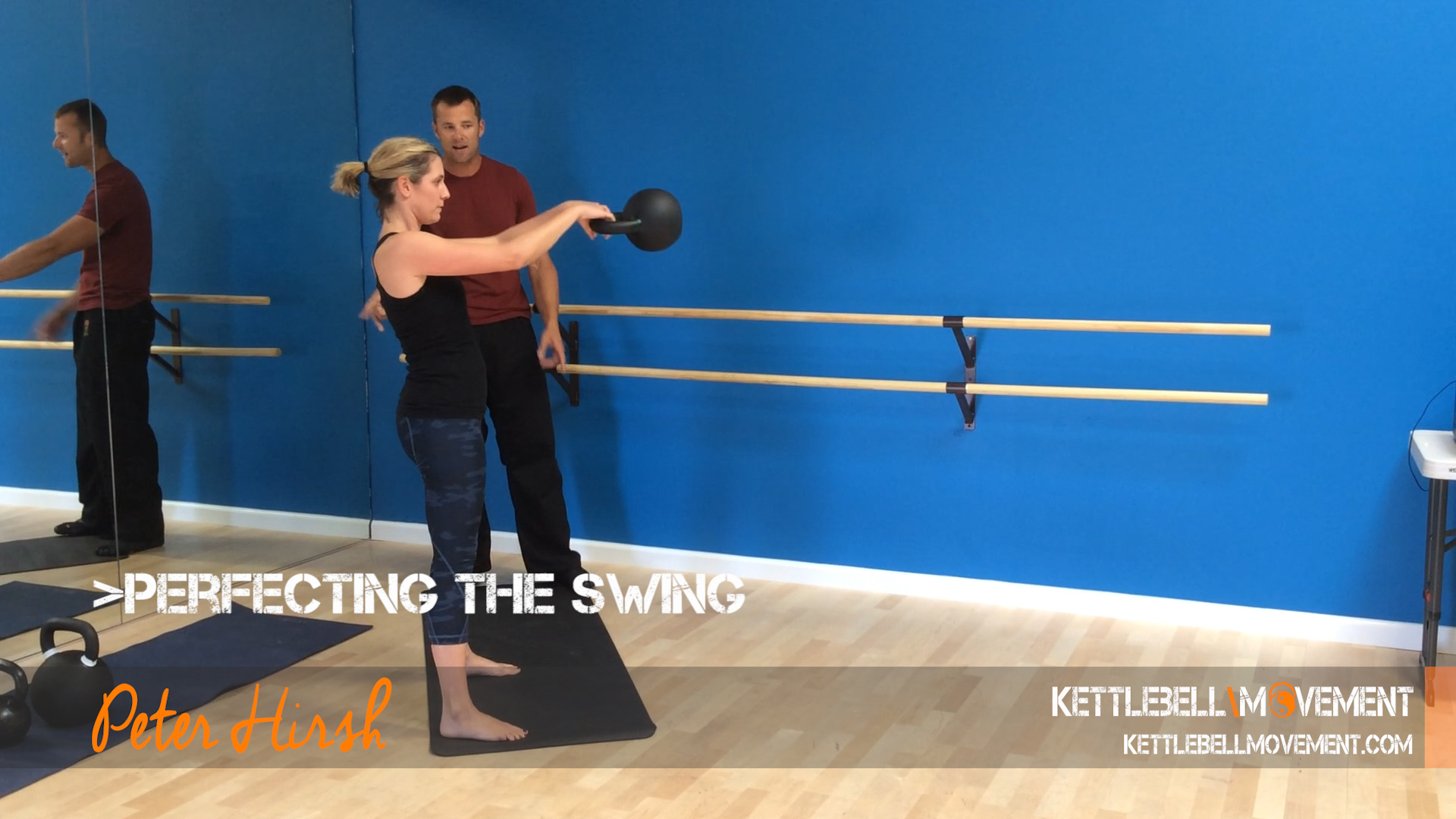
Combining both of these will fix your posture in the short and long term. After you have made significant strides to fix your anterior pelvic tilt, the kettlebell swing when done properly will pick up where your deadlift leaves off.
Tight Lats
Tight Lats are also a major contributor to mid back pain in kettlebell training, which includes a lot of overhead lifting. Tight lats prevent you from getting your arm all the way overhead and locking out at the elbow. Instead, your arm will hover in front of it’s plumb line by a number of inches. This will make even a light weight feel unusually heavy and after a few exhausting reps is usually remedied by extension in the back. By extending the back, you can lift the weight more directly overhead, but it puts a tremendous amount of pressure on the spine. Perform lat stretching and full ROM pull ups to help create strength and mobility in the lats. If pull ups are a bit too much, do pull up negatives where you use a box or chair to step up to the bar and lower yourself down in an eccentric phase only pull up. Keep the reps low, but higher frequency, three to five reps two or three times a day is better than fifteen all at once.
Exercises to Prevent Back Pain
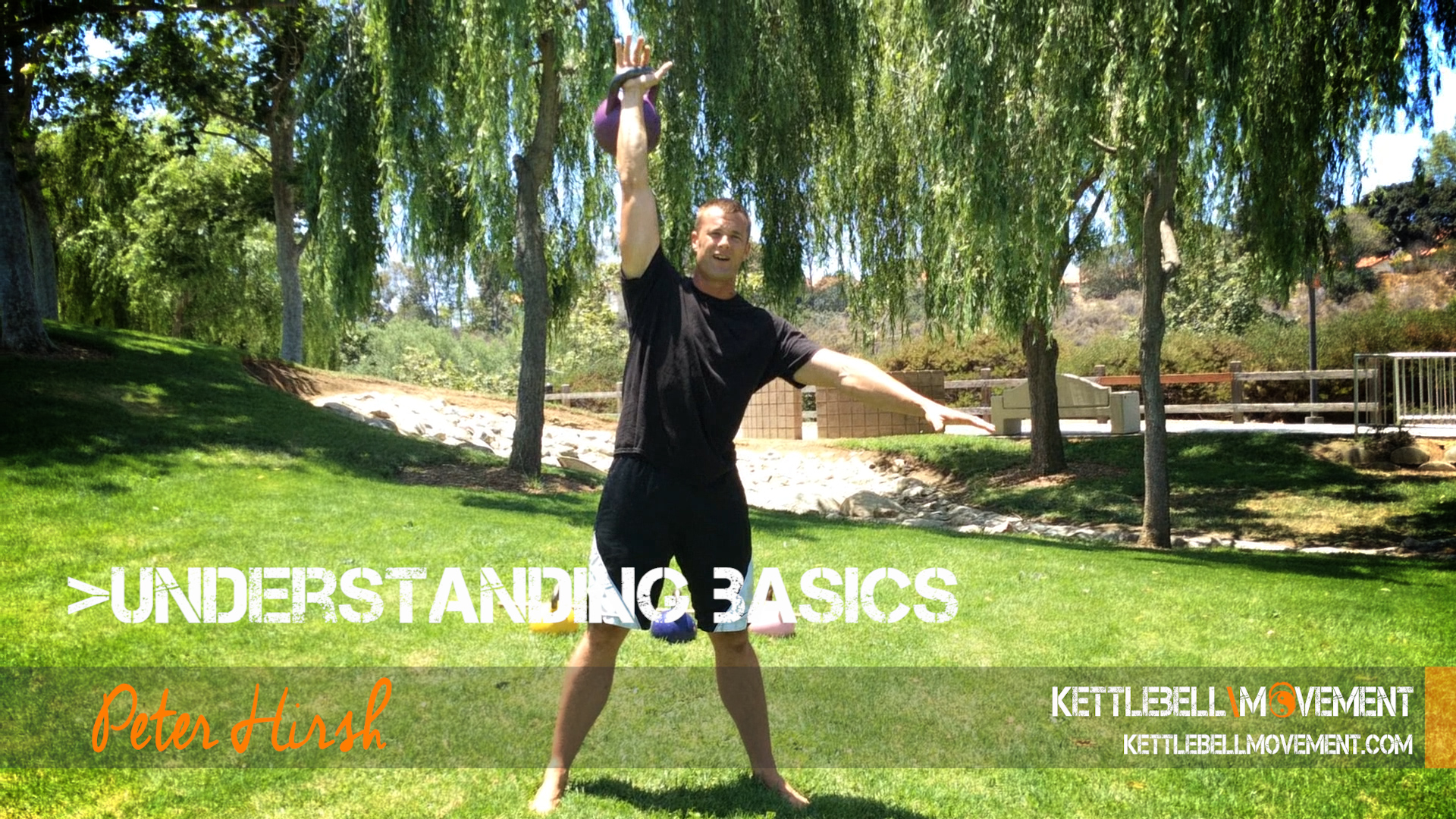
In my experience, the deadlift and kettlebell swing are great exercises to prevent or rid yourself of mild back pain. If you have more serious occurences of back pain, then exercises such as the see saw press, windmill and eventually the bent press might be what you need to develop mobility and strength.
These exercises are progressions that you shouldn’t do if you haven’t already worked out the aforementioned tightnesses in yout hips and shoulders, but offer a tremendous opportunity to build thoracic rotational strength. Balance your power exercises with a proper amount of mobility exercises. Personally, I always loved the big power of the kettlebell snatch both dead and ballistic.
If you hold a lot of stress in your muscles, this can lead to excessive tightness causing extreme nerve pain, numbness and weakness. Massage can often be a wonderful way of releasing this tension. The solution to your back pain will be as unique as the factors causing it and the person feeling it, and so must be your approach to solving it. Do what works for you and add in enough experimentation to stay open minded without causing injury. Find the right combination of stretching, dynamic movement and tissue release and you should be able to get and stay free of back pain.