Kettlebell training is about learning how to use your body and developing motor patterns that will empower you to work to your bodies true potential. It is an art form for the thinking person that wishes to develop strength on the level of the mind and body as well as reshape their body at the same time.
As we go through our teaching, we will learn the kettlebell basics, clean&press, snatch, and swing. However, before we start lifting the bell in this way I’m going to help you feel comfortable manipulating it in the various ending positions of the clean, press and snatch. I will show you how to control the bell from the overhead loaded lat position, down to the rack, and back to the dead position. You can practice this with very little weight, even a water bottle is fine. Once it feels consistent and comfortable, you will be ready to learn the three primary kettlebell lifts. Remember, the essence of the kettlebell clean&press and the kettlebell snatch is keeping the weight as close to your body as possible, where it is the lightest and easiest to manipulate. When these movements are performed properly it gives your nervous system an awareness of what neutral posture is. This will make it easier to maintain good posture throughout the day. By combining reprogramming of the central nervous system with increased flexibility and tension in the muscle, you will see immediate and long lasting changes to your posture when you train and develop these movements properly. The better the movement becomes, the heavier you will find yourself wanting to go. As you use heavier weight your nervous system and muscle flexibility become even more powerful, just remember to never sacrifice form to lift heavier. I will get to the very specifics of lifting heavy at a later date, for now, let’s just focus on consistency by making every rep look the same as the last. Using a light weight here, lets learn how to control from the top down.
The loaded lat
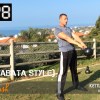
The overhead position. This requires flexibility in the lat and shoulder girdle to get the weight directly over it’s neutral balance point. Do not arch your back in this position to accommodate for lat or shoulder tightness! Drop the shoulder down (don’t shrug) sinking the shoulder blade into the lat and keep your arm straight.
Taking the bell from the loaded lat to the rack position
From the overhead loaded lat, push your hips forward, while “crunching” your abdomen, and slightly twist the bell to the outside. Pull the bell down with your lat to the rack. This may take a moment to get right. By putting the hips forward, it enables you to keep the bell in the neutral line of your body where it is lightest. The slight twist as the bell begins to descend allows you to get your fist under your chin when you “pull” the bell with your lat into the rack. Remember, practice light and develop the motor pattern before going heavier.
Rack Position
Keep the abdomen tight, hips slightly extended under the weight and your fist under your chin, elbow against the body. Your knees are straight but not locked.
Lowering the bell from the rack to the dead position
This will look virtually identical as the lift from the ground to the rack, it’s the reverse of the kettlebell clean. Once you’ve developed the motor patterns I’ve already discussed, you’re ready to learn the deadlift and then the clean. This final phase of movement, from the rack to the dead position, will then become apparent. Remember to keep the bell close and move in the hips. We will spend a lot of time developing this motor pattern so I won’t go too much more in depth here.
The Dead position
Lined up to your heels, directly in the middle of your body. This is where the weight will feel the lightest for any lift with a vertical trajectory such as the deadlift, clean&jerk or snatch. This is not the starting position of a kettlebell swing, as the swing is a front-to-back (horizontal) movement.