Category : Basic Kettlebell Workouts

Basic Kettlebell Workouts Endurance Workouts

Fat Burning Kettlebell Progressions

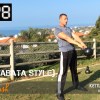
Welcome to Encinitas, Ca. For your Friday kettlebell practice! Today, we are going to embark on a series of fat burning kettlebell progressions that will get you started with the basics and work our way gradually toward some high output training. It may not seem all that difficult at first, but we will progress through the basic kettlebell moves until we give it our all in the final rounds.

I am using a single kettlebell for the entire session, for me, a two-pood (seventy pound, or about one third of my bodyweight) bell is perfect. You may wish to start with a lower weight bell in proportion to your bodyweight, depending on your skill and experience level. Make sure you are completely warmed up before you begin as I won’t be doing a warm up in this video. Your warm up should include dynamic range of motion in your hips and your shoulders to prepare for eventual overhead lifting.

One arm swing

Ten reps per hand, consecutive, starting with non dominant hand.

Ballistic Cleans

Ten reps per hand, consecutive, starting with non dominant hand.

Dead Cleans

Ten reps per hand, consecutive, starting with non dominant hand.

Alternating Cleans

Twenty reps total, with twenty swing switch transitions.

Clean and push press/jerk

Ten reps per hand, consecutive, starting with non dominant hand.

Ballistic clean and push press/jerk

Ten reps per hand, consecutive, starting with non dominant hand.

Dead Snatch

Ten reps per hand, consecutive, starting with non dominant hand.

I look at this workout as a series of gradual progressions that bring you gradually to the king of the jungle, the dead snatch. If you haven’t heard me say it before then I will say it again, I love the dead snatch. While the weight being used is quite heavy, I am suggesting a medium heavy bell, not a heavy-heavy bell. This is because the rep count is quite high and you will be putting the bell overhead thirty times per hand. However, try not to use too light of a bell as they don’t teach the movement as well and won’t provide you with as much all around benefit. I hope you enjoy this workout, if you are in a time crunch, this circuit will provide you with an awesome workout in a very short time. You will get your heart rate up, develop some good motor patterns and be sore the next day! Keep up the good work and have fun getting stronger!

Peter Hirsh

Read More
Basic Kettlebell Workouts Endurance Workouts

Kettlebell Fundamentals Workout

Kettlebell Fundamentals Workout

Welcome to another Friday workout here on Kettlebell Movement. Today we are going to lift medium to heavy bells with basic movements that will challenge you big time. We will be using one handed kettlebell techniques that will allow you to switch hands and keep going, digging deeper and deeper for the will to continue as the heart rate climbs. Starting with basic movements to get you going, the exercises will get more challenging over the three rounds that we are training. Make sure you have all of your basic kettlebell moves well practiced before you begin, including the kettlebell swing,kettlebell clean & press and kettlebell snatch. Using heavier weight with longer sets isn’t the time to learn the fundamentals of kettlebell training.

This kind of workout is appropriate for just about anyone with a goal of overall functionality and fitness, as long as you have reached the level of performing these moves safely. If you have any injuries or muscle tightness that prevent you from going through the full ranges of motion pain free they should be addressed before you begin. Muscle burning and high heart rate are just fine, but shooting, stabbing pains are a warning sign to back off and do more corrective training before continuing.

The one arm, full body exercises will develop strength evenly in your entire kinetic chain, from left to right and from top to bottom. We will go back and forth from pulling muscles to pushing muscles to keep the intensity up, while moving from one strength to another. Many of my workouts are simple variations of basic moves put together in a way to get maximum benefit. From exercise selection, to rep count to tempo, the fundamentals can be changed around in ways that will keep your body guessing and keep you seeing results. You can also have a lot of fun learning ways to vary the exercises you have already perfected to constantly provide you with excellent results.

Today’s Workout

Round One

Ten swings left
Ten pushups

Ten swing right
Ten pushups

Repeat one more time

Round Two

Ten cleans left
Ten push press/jerk left

Ten Cleans right
Ten push press/jerk right

Repeat one more time

Round Three

Ten snatches left
Ten snatches right

Repeat one more time

The cleans and snatches are both ballistic, as opposed to being lifted from dead. This will allow us to really take full advantage of the shape of the kettlebell for the power phase moves. You will be taking full advantage of the range of motion in your hamstrings and glutes as well as focusing on decelerating the bell as much as accelerating the bell with your hips. If you think you’ve got this session down, try using a heavier bell and test your limits. In this video I am using a bell that is about one third of my bodyweight; seventy pounds or thirty two kilograms, also known as the two-pood. You can expect to be sore all over from this and you will probably notice that you are walking around a little taller and straighter for a few days afterward. Let this feeling of strength motivate you to keep pushing and learn new ways to vary your training for results and enjoyment. Thank you for training with me today, I hope you had fun getting stronger!

Peter Hirsh

Read More
Basic Kettlebell Workouts Getting Started With Kettlebells Workouts

Getting Started With Kettlebells Workout

Getting Started with Kettlebells Workout:

Thank you for joining us here at Kettlebell Movement. One of the most common questions people ask me is “where do I get started?” Today I am going to take you through a workout of basic kettlebell exercises that is great for beginners or people who want to perfect their technique. The idea here is to progress you through the basic kettlebell moves one at a time. Don’t progress each exercise until you feel completely ready to do so. I am going to show you today how to progress your way through the various kettlebell specific lifts, the kettlebell swing, kettlebell clean and jerk, and the kettlebell snatch. I am also going to take a few minutes to warm you up and build some reliable motor patterns before we enter the power phase kettlebell lifts. Getting started with kettlebells will start with weight selection, I have three different weights available to me today.

While I will be teaching technique to a degree, I encourage you to watch the lesson for each exercise before training with me today. Every exercise that I am demonstrating has in depth instruction to help you prepare. My main goal is to help you see the order of progressions that you will want to take when you get started with kettlebells. You may take weeks or months to progress on to some of the exercises I am teaching today, you must listen to your body and do only what feels right.

Todays workout:

Deadlift

Ten “regular” deadlifts
Ten Stiff leg deadlift
Ten one leg deadlift (five per leg)

Swing

Twelve Two handed Swing
Eight one handed Swings per hand
Twelve Alternating Swings

Clean

Five cleans from dead per hand
Five ballistic cleans per hand

Clean & Press

Five clean & Press per hand
Five Clean and push-press per hand
Five clean & jerk per hand

Snatch

Five snatches from dead per hand
Five ballistic snatches per hand

These are the three primary kettlebell exercises, your foundation that are the reason kettlebells are so widely respected. You will learn from here that there is an infinite world ahead of you as you progress to newer and more challenging variations and exercises. The turkish get up is one of those exercises that you will see me implementing a lot in our practice because it will improve your ability with every other lift.

You may notice that these exercises make you sore all over your body, but hopefully not excessively. You may also notice that the muscles you feel the most sore in are not the ones that felt the most fatigued in the moment. Often your grip, mid-back and shoulders feel fatigue while the upper back, glutes and hamstrings feel more sore. Practice all of these lifts until the motor patterns are hard wired into your head. As your ability increases, your confidence builds and learning becomes easier and a lot of fun. The changes you will see in your body from this training will be immediate and obvious.

Thanks for joining me,

Peter Hirsh

Read More
Basic Kettlebell Workouts Workouts

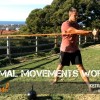
Back To The Basics: 7 Primal Movements Workout

7 Primal Movements Workout:

Thank you for joining me for this Friday’s practice. Today we are going to do a seven primal movements workout with three rounds of the primal movements that will get progressively harder as the rounds progress. We will perform our first round of six primal movements using the most simple variation of the movement. The seventh primal movement is variations of gait; walking, jogging and running. I won’t be performing this in the video, but feel free to walk, jog or run after each round! The second round will be more challenging than the first and the third more challenging than the second. If you feel that I have progressed beyond the point that you feel safe, please revert back to the variation from the previous round. If you are able to perform all three rounds of all of the six primal movements that I demonstrate, you’ve done very well!

Round one:

Bend/Extend
The first variation of the bend to extend pattern I will demonstrate is the deadlift. While this isn’t the most extreme example of the bend to extend movement, it is certainly the strongest and most frequently used. A bend to extend motion is hips back.

Squat
The front squat, or goblet squat, is the first squat I am demonstrating. I use a weight in front close to my chest. You may consider learning this exercise without any additional weight at all. It’s okay to get the hang of them with just bodyweight at first.

Lunge
The backward stepping lunge will feel the most natural but it will still challenge your balance and increase your flexibility in your hips. A great exercise for anyone with tight hips or back pain.

Twist
The first round of rotational exercise is called a chi swing, a chi building exercise in Tai Chi. Take it easy and use this round as active rest.

Push
The simple push up is what I am going to use for the first round of our pressing movement. Too challenging you say? Simply perform the incline pushup with your body at an angle and lighten the load. There is a push up variation out there for everyone!

Pull
The bent row is a great way to learn how to pull things properly. People commonly lose the ability to pull with their upper backs as their shoulder blades and all of the muscles around them stop moving in normal range of motion. Using a lighter weight can allow you to feel the shoulder blades moving toward and away from your spine with each rep.

Round two:

Bend/Extend
In the second round. I will demonstrate a more extreme progression of the bend to extend movement; the stiff leg deadlift. This progression will take much more hamstring flexibility. Make sure you keep your back flat, as with all bend/extend movements, it can be especially difficult to do on this exercise.

Squat
The rack squat is a sure fire way to get your quads sore tomorrow! By shifting the weight in your hand to one side and then the other, you will feel your stabilizers and primary movers fire like they haven’t in a very long time!

Lunge
The variation of the lunge for the second round is the lunge to balance. The lunge already demands that you have good balance, now you will come to standing on one leg. Use full range of motion to get the benefit of opening the hip flexor of the back leg, then step up to a balance.

Twist
The alternating T- stand is our next progression of the rotational movement, combined with a prone position, this will fire your core big time.

Push
When it comes to progressing your pushing exercises, instead of adding resistance, change the stability. By using hanging handles, such as gymnast rings or suspension trainers, you can perform an unstable pushup. Because I don’t happen to have that option today, I will use two wobbly kettlebells!

Pull
The alternating row will require you to keep your back flat, brace in your core and make proper use of rotation. You will feel this in your upper and lower back as well as your glutes and hamstrings.

Round Three:

Bend/Extend
The one legged stiff leg deadlift is the final variation of the bend/extend motion. Using balance, flexibility, strength and focus, this one does it all.

Squat
The overhead squat is one of the most challenging of all, requiring excellent flexibility in both your shoulders and your hips. One of my personal favorites, it combines the squat with rotation and the stability of overhead lifting, an excellent choice!

Lunge
As we progress our luge into the final round, lets add another of the seven primal movements to it and perform the lunge and press. This exercise will be far more intense on your core stabilizers at the base of the lunge than it is about the pressing muscles during the overhead lift.

Twist
This variation of rotation is the resistance band rotation, although any kind of sideways resistance will do. Gyms often have pulleys with adjustable resistance levels that are great for this exercise too.

Push
In the final progression of the pressing movement, I will demonstrate both the military press and push press to give you yet another way to add variation to your workout.

Pull
The renegade row is an extremely challenging progression of a pulling exercise, and honestly, if I had a pullup bar, I may have even shown that instead! It is possible that pull ups are easier than renegade rows but that depends on the person doing them. Keep your plank tight as you learn this progression.

As you continue, you will learn how you can combine many of the seven primal movements with themselves and other exercises to change up your workouts. As we did today, we ended up on one leg, in the prone position, and using what could end up being an endless combination of tools. Remember, posture is everything and flexibility is the key to good posture. If you can determine specific factors that are preventing you from being able to move the way you want, then target those areas with stretching, dynamic range of motion drills and myofascial release. The tightness in your muscles will throw off your posture and cause chronic joint pain, it will prevent you from performing to your potential and it will undoubtedly lead to injury. Sports related injuries due to muscle tightness are so common, people assume it’s just a part of the game, or aging. Neither are true.

Thank you for working out with me today, I will be back on Wednesday for a lesson and next Friday for another workout, so practice up!

Read More
Basic Kettlebell Workouts

Peter’s London Kettlebell Workout, Part 1

Peter’s London Kettlebell Workout, Part 1:

This is my first workout in England. I haven’t been able to move much since I got off the plane so I am looking forward to using the kettlebells I borrowed from Box Bell fitness just a few miles from where I am staying in Warfield. I will be using two weights, a light weight for warm up and mobility and a medium/heavy weight for lower rep lifting. As always, you can expect a few body weighted exercises to be included in the workout as well. There are quite a few different exercises in this workout, so take your time to learn each exercise before you begin the workout. You should already be consistent with your kettlebell deadlifts, kettlebell swings clean&press, and lunges to perform this workout safely. I will begin slowly but remember, I just got off the plane!

Lets loosen up:

  • Chi swings. In tai chi, this is a chi building exercise, I love the rotation and also acting like a bit of a kid. Stay with these for sixty seconds to five minutes, gaining speed slowly as you go.
  • Ten reps of bodyweight squats. Notice this movement is hips down, not back, try to minimize your forward lean.
  • Backward stepping lunges, five reps per leg. These will open your hips up and get them ready for exercise. By lengthening muscles slowly and methodically we can help prevent injury.
  • Around the world ten passes in each direction, keep your shoulders back and down.
  • Halo: sixty seconds per hand. Keep the bell close to your head and really work the shoulders in a big range of motion with light weight.

Before we start any ballistic movements, lets start with two sets of:
Ten Deadlifts, Ten pushups

The Workout, Two Sets Of:

  • Ten, two handed kettlebell swings.
  • One clean, five push-press per hand. Clean the bell to the rack position and repeat five reps of a push-press, then switch hands and repeat.

We will finish up with a quick three minute drill of clean and push-press. You can regress the push press to a press or progress it to a jerk if you need to adjust up or down for your kettlebell weight. In other words, if you only have a light bell to use, you can simply press it overhead. If your bell is slightly heavy you may use a jerk, as opposed to the push-press which you will see me use. I explain the differences between the three movements in this video, if you haven’t seen it already.

With three minutes on the clock, perform;

  • A ballistic clean and push press, return to the rack. Swing switch, clean and push press to the other hand. Repeat this swing switch, clean and push press drill for three minutes. Take the time you need to rest in the rack and overhead loaded lat position to catch your breath and regain your composure.

This has been a lot of shoulder work and you may be sore there tomorrow. The swings and push presses also demand a lot out of your core. You may feel like you’re standing up a little straighter for a couple of days, this is a good sign! I am sure you also felt the demand on your cardiovascular system so I don’t need to tell you that you burned tons of calories as well!

Thank you for training with me today, I will bring you another workout from England soon, stay tuned!

Peter Hirsh

Read More
Basic Kettlebell Workouts Workouts

Overhead Press Workout

Thank you for joining us today for a short overhead press workout. Follow closely to the guidance provided to maximize your benefit and avoid injury. Before you train this session you should have learned the the deadlift, kettlebell swing,and the kettlebell clean&press.The push press is a highly challenging exercise, especially when performed for longer repetitions. Typically I am not a big advocate of extremely high rep weight training for frequent practice. However, this drill has an advantage that many others don’t. You will switch hands frequently which will minimize muscle fatigue over a slightly longer set. The declining rep-count will also help your strength endurance. Make sure you stay focused as your heart rate increases to maintain safety and maximize the benefit. You will notice quite quickly how challenging it is to move weight from the rack to the overhead loaded lat position for repetitions. The constant demand on your core, shoulders and focus will make this drill highly challenging.

The Workout:

Today’s session begins with a clean to the rack position with your non-dominant hand. Switch hands by either placing the bell dead, or with a swing switch, then clean it to the dominant hand rack position.

Perform twelve presses non dominant
Switch hands
Perform twelve presses non dominant

Switch hands

Nine presses non-dominant hand
Switch hands
Nine presses Dominant hand

Switch hands

Six presses non dominant hand
Switch
Six presses dominant hand

Switch hands

Three presses non dominant hand
Switch
Three presses dominant hand

Remember:

  • Make sure you don’t arch your back as you press
  • End with a locked-out overhead position
  • Maintain a straight up and down fist the entire movement
  • Breathe in at the bottom, exhale at the top
  • Keep your shoulder back and down

This drill won’t take long so feel free to incorporate it into your existing routine. This exercise goes well with pulling exercises, kettlebell swings, lunges and deadlifts. You may feel soreness in your shoulders, triceps and abdomen and probably noticed a significant demand on your cardiovascular endurance while performing the drill.

Thanks for joining me!

Peter Hirsh

Read More
Basic Kettlebell Workouts Kettlebell Snatch

Kettlebell Snatch Workout

Ballistic Kettlebell Snatch Workout:

The kettlebell snatch is my favorite exercise and when done properly is the ultimate in fluidity and total body functionality. Before you begin today’s quick practice, you should have practiced the ballistic snatchinstructional video that we released Wednesday. Make sure you feel completely comfortable with the movement. This routine will only take you a few minutes and should be performed after you have warmed up sufficiently. If you are someone that struggles with flexibility, I encourage you to warm up with turkish get-ups using a light weight and then progressing to medium weight. Just a quick reminder, the deadlift, swing, and clean&press are prerequisites to learning the kettlebell snatch.

This mini drill can be added into your existing workout or be performed as a quick routine when you are in a time crunch. As part of a bigger workout you could perform this drill two or three times in combination with other lifts. When considering other exercises to combine keep in mind that the snatches are very challenging for your grip, posterior chain (back of your body) and your cardio. For this reason, I recommend training snatches with something using a pushing movement, such as push ups. This will minimize your grip and activate more anterior chain (front of body) muscles. Other options could be rotational or balance exercises, depending on your fitness goals.

My goal is to provide you with more intense and time consuming sessions as we go, this drill is here to set up the basis for success as we progress. As always, learn the motion properly and stay focused, technique is everything.

Today’s practice:

Ten snatches with non dominant hand
Swing switch
Ten snatches with dominant hand

Swing switch

Seven snatches with non dominant hand
Swing switch
Seven snatches with dominant hand

Swing switch

Five snatches with non dominant hand
Swing switch
Five snatches with dominant hand

Swing switch

Three snatches with non dominant hand
Swing switch
Three snatches with dominant hand

You may be sore in your glutes, hamstrings and upper back from this session. If you feel your hands starting to hurt from callouses you can consider wearing gloves or using chalk. If ever your hands start to hurt, the dead snatch tends to be much nicer to your skin. Feel free to make that change in our workouts if needed. Racking the bell on the way down from the overhead position can also help diminish the friction on your hand, however, you will lose the benefit of training the deceleration in your hips. The deceleration of the kettlebell has fantastic benefits for developing strength and injury prevention in the real world. As we continue, I am going to demonstrate the differences between the ballistic and the dead snatch. I will also help you fine-tune both of these excellent movements. Until then, keep practicing this drill until you are able to use the weight that demands you work at your full potential. Doing this will set you up for success as we continue in your development of unbelievable strength.
Thank you for training with me today,

Peter Hirsh

Read More
Basic Kettlebell Workouts Workouts

Bullet Proof Shoulder Workout Part 2

For Bullet Proof Shoulder Workout Part 1 click here.

Bullet Proof Shoulder Workout Part 2:

This is the second installment in developing bulletproof shoulders. Hopefully you have already taken the time to do the first bulletproof shoulders, which was ten rounds of alternating turkish getups. This second lesson will utilize the range of motion and strength you developed in the first. Feel free to perform the first lesson directly before the second if you really want a challenge and are ready for some real work!

We are going to start with a couple of quick exercises to loosen your shoulders and get your body warmed up. You are welcome to add these two warm up exercises into any warm up that you are performing for a kettlebell workout, they are some basic go to exercises in the world of kettlebell training.

Halo: 60 - 90 seconds

Use a light kettlebell, and grab it with both hands by the “horns”, bottoms-up. Keep your shoulders back and down, use a small circle around your head to create mobility and loosen your shoulders. Keep your elbows up and go slowly so that you can feel the range of motion occurring. Switch directions halfway and try to note any differences in the sensations that arise from side to side. Often, we have strength or tightness on one side and not the other, especially in shoulders, back and hips. Work into the tightness to create range of motion as you go.

Around the world: 60 - 90 seconds

This will assist with shoulder mobility. Make sure you don’t swing your body around with the bell, switch directions halfway through. Keep your body upright and resist rounding your shoulders forward as you switch hands.

Sots Press: Four reps per hand, four rounds each.

Using a light kettlebell, clean the bell to the rack position, then squat (rack squat). The squat will be made to feel easy if you are able to keep your body vertical and move in an up and down direction. This is not to be confused with a bend/extend motion of a deadlift that is hips back, instead think hips down. You will find that with a rack or goblet squat if you move hips back in a deadlift pattern. The forward lean of the upper body that is necessary to keep your balance will make the kettlebell feel way too heavy. By moving your body up and down, you will keep the weight of the bell much closer to your neutral line of gravity where it feels considerably lighter.

The five steps to the sots press are:

1) Clean the bell to the rack position
2) Squat down.
3) Press and rotate with a flat back.
4) Lockout the bell over the neutral plumb line of your body.
5) Stand out of the squat to the overhead loaded lat position.
6) Lower the bell to the rack position

Repeat steps 2-6 until you have performed four total presses then reverse the clean to the ground and switch hands. One round is complete when you have performed four consecutive sots presses per hand for a total of eight presses. This practice is four total rounds for bulletproof shoulders workout part two.

You will probably notice how even very light weight feels extremely heavy in this move. That is due primarily to tightness in your shoulders which will be worked out with every repetition. You aren’t just fighting the resistance of the weight of the bell, but also the resistance from the tightness in the opposing muscles. Keep practicing and you will notice major changes in your overhead lifting ability that will no doubt carry over to your clean&press and snatch. I can’t tell you how frequently I see people struggle to maintain even a medium weighted kettlebell in the overhead loaded lat position due to shoulder tightness. This, along with inflexibility in the hips, is the biggest reason people don’t reach their potential with overhead lifts. You will feel the strength and flexibility developed in this practice immediately and you can come back to this lesson as often as you wish.

Thank you for working out with me today and developing those bulletproof shoulders that we will be using as our workouts get more and more challenging.

Peter Hirsh

Read More
Basic Kettlebell Workouts

Kettlebell Circuit: Figure Eight, Rack Squat, Stiff Leg Deadlift

Kettlebell Circuit: Figure Eight, Rack Squat, Stiff Leg Deadlift:

If you haven’t already taken the time to watch Wednesday’s lesson on the figure eight to a static hold, please take the time to do so: click here. Practice the lesson until you feel completely comfortable with the exercise. In today’s circuit I will introduce two more movements for you to learn.
I recommended starting start with a quick functional warm up before beginning this short workout session.

After you warm up get started with:

Figure eight to a static hold: fifteen on each side for a total rep count of thirty.

Refer to Wednesday’s lesson and use a weight that will work for medium rep count. Remember, switch hands under the same side leg as you were holding the ball of the kettlebell. In other words, if the ball of the kettlebell is in your right hand, switch under your right leg. Keep your back flat and sit deeply into your hips.

Rack squat: four per hand.

Inhale, move your hips down, maintain flat feet and a flat back, and sit deeply into your hips.

Use your free hand as a counter balance, this is a downward movement with your hips. Your knees will track your toes but don’t allow them to move forward past your toes. Try to keep your torso as vertical as possible. If your hips move too far behind you will need to lean forward to maintain your balance. If you lean forward during a rack squat, the bell will feel extremely heavy and be hard to control as it tries to fall forward. Stay vertical, learn to sit down as deeply as possible without rounding your back, losing core tension or externally rotating your feet. Try to keep your feet as flat as possible. The feet often have a tendency to roll inward (arch toward the ground). If any deviations occur that you are unable to correct, simply decrease the range of motion (depth of squat) to the last point you were able to maintain good posture. You may notice this point of postural deviation gets further and further away with each careful, focused repetition.

Stiff leg deadlift: five per leg.

Use your hip as the only pivot point and inhale. Then lower your upper body and raise one foot as a single unit, like a see-saw. Come back to standing the same way you came down.

The stiff leg deadlift will be very challenging for your balance so you will need to go very slow and focus. Your entire body, from your head to your ankle (of raised foot) should be in alignment the whole time. The most common mistake people make with these is rounding their back as they come down, make sure not to do this! Keep the bell as close to you as reasonably possible, if it starts to swing out front or even side to side, the balance will become much more difficult. These deadlifts can be tricky to learn but are immensely rewarding because they work on so many levels of strength and fitness. They build functional muscle, create flexibility, balance, connect the mind and body and burn lots of calories, especially when done as a part of a circuit as we are doing today.

Repeat this circuit one more time.

We are performing this circuit twice today, which makes this session quite short even with a warmup included. Feel free to practice any of your kettlebell basics that you are still working on, repeat this workout for four rounds, or simply incorporate it into your existing routine. Join me again on Wednesday for a learning session and next Friday for a longer practice session.

Thank you for watching and working out with me today!

Read More
Basic Kettlebell Workouts Flexibility Turkish Get Ups

Bullet Proof Shoulder Workout Part 1

Bullet Proof Shoulder Workout Part 1:

Before you begin today’s practice session, you should already have learned the turkish getupto the point where you can easily remember all of the basics. You should be able to reliably perform the various movements and should not be struggling with which foot to put flat or which knee to bend as you switch back and forth. With that exception, there are no other specific lifts that you will need to know to follow along in today’s training.

Today, you are going to work with me on what is quite possibly the only thing you’ll need to create the shoulder strength, stability and the flexibility to safely perform overhead weight lifting. This will be the first video on shoulder strength and stability and will focus on perfecting the technique of the turkish get-up. Start with a light enough weight that you can warm up slowly and avoid going to complete failure at any point during this practice session.

While the turkish getup is about far more than just building amazing shoulder strength, it is still the best exercise for developing the ability to lift weight overhead safely. Think of all of the other muscles and motor patterns you are training in this practice session as an added bonus. When my clients tell me they have a goal of lifting a certain amount of weight in a given lift; I know the turkish get up will build that foundation.

In todays practice session, we will perform ten rounds of turkish get-ups using very manageable weight. Feel free to start very light and move up to a mid-weight bell if you prefer. I started today with a 53lb (24kg) kettlebell and increased on the fifth round to a 63lb (28kg) bell after I had warmed up.

Alternate hands with every repetition. Switch hands safely with two hands on the bell and remember to keep the bell as close to you as possible when switching sides. Each round is one turkish get up per hand for ten rounds, a total of twenty turkish get ups. I generally encourage people to start one arm sets with their non dominant hand. You will notice I go from my left hand to my right with each round.

Make sure you use excellent technique. Follow along to the video for constant visual and verbal cues to help you with each phase of the movement. Use each repetition as a learning opportunity. By fine tuning your technique you might be able to increase the weight you are using without any increase in physical exertion. It’s all about learning how to make the weight feel light. Pay attention to the most subtle changes and watch your improvement as it happens. Remember to have fun and stay process oriented. Come back to this session in a month and compare your performance. This lift carries over to nearly every other physical activity you can engage in!

Thank you for working out with me today,

Peter Hirsh

Read More
1 2

Affiliate Debug : The Not via an Affiliate cookie has been set. This means you are accessing the site via a valid WordPress logged in user. I am ignoring any future affiliate clicks for this browser session.