
Today we are going to learn two great exercises, the lunges and rows. These are both great movements to add to your practice and I will be using them in many workouts on Kettlebell Movement.
Lunges
Lunges are great to open up your hips and because there is such a variety of ways you can perform them they are a fantastic exercise to add in to your program. You might notice that the backward stepping lunge feels slightly more natural for weight distribution than the forward stepping lunge. Today, let’s go over basic technique for the backward stepping lunge and make sure you are doing it safely and effectively. People are often caught off guard by the balance factor and wobble far more than expected side to side. Take your time to get these right, please don’t rush the movement and end up missing the benefit of this awesome exercise.
When stepping into your lunge, the distance between your feet, or the length of the step forward or backward, is vital to a good lunge pattern. Your stride should be long enough to allow you to lunge down without allowing your front knee to drift over the toe or your back knee move in front of the hip. I usually tell people to take as long of a stride as they feel comfortable taking. However, that advice may be taken too literally and it is possible to over extend yourself so be reasonable. When you lunge down, keep your torso erect. Don’t let your pelvis dip down in the front and up in the back and don’t lean forward.
As you stand out of the lunge, make sure you don’t arch or round your back, brace your core and push forward and up with your back leg. When you reach the top of your lunge stand tall and neutral in good standing posture. Switch legs with each rep to keep the heart rate up and stay on the same leg to feel more of a muscle burn.
If you are doing lunges correctly, you will feel them in your glutes and abs. You will also probably be sore in your hip flexors because lunges help lengthen tight hip flexors. Remember, anytime you take a muscle or muscle group through a greater range of motion than they are used to going through they get far more sore than training that muscle within the confines of it’s usual limitations. Hip flexor soreness helps improve range of motion when you both train and recover correctly.
Bent Over Row
The Bent over row is a great move to to complement kettlebell training and the kettlebell design is great for this particular lift. This exercise will give you the opportunity to develop range of motion in your shoulder blades. I often see people who have immobility in this area. This ends up causing their arms to do much more work in their daily life than the upper back and chest and often leads to chronic shoulder pain. The bent row is about developing that mobility and strength by using your upper back to move the weight and feeling your shoulder blades move freely.
In the bent over row, make sure you keep your back flat and feel free to rest your free arm on your forward knee in a long lunge stance. Try to lift the bell straight up and down. I see a lot of people swinging the bell front and back with each row, this is both unsafe and inefficient. Slight rotation in your midsection is fine, just don’t lead with the rotation to try to jerk the weight up. Use a hook grip on the bell, if you are doing these as a part of a circuit it may be best to follow with a non-grip intensive exercise such as a lunge or pushup. Don’t forget to breathe and as always, be exact in your technique.
Thank you for reading, we will be using these exercises in future workouts to come!
Peter Hirsh
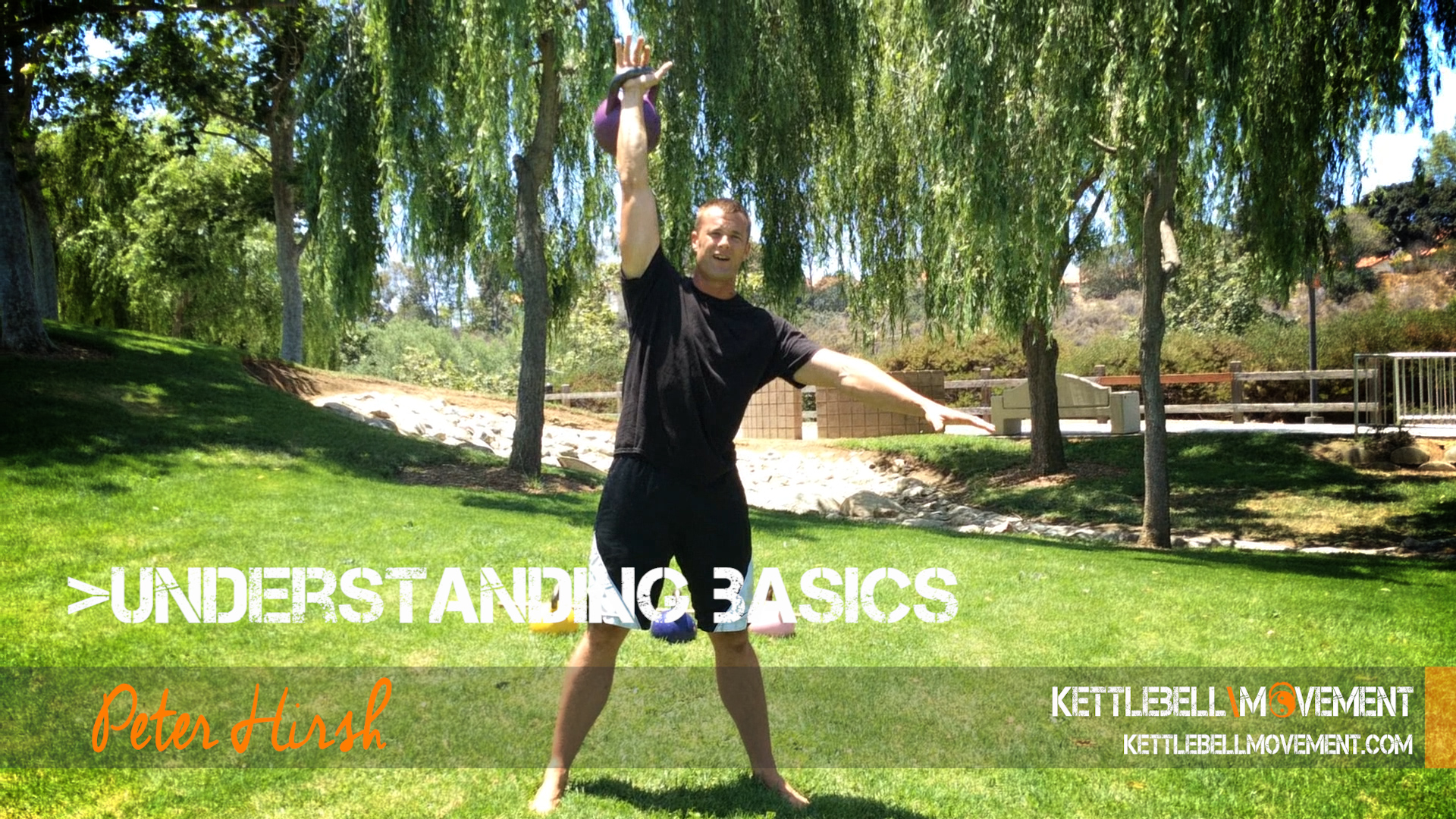
[…] I highly recommend that you have already taken the time to learn how to do deadlifts, push ups, and lunges and rows. Also, for todays bonus round I recommend that you take the time to get your kettlebell swing, and […]