Many people think that blistered hands and bruised wrists are just a part of kettlebell training, but this doesn’t have to be the case. Developing proper technique with your hands and throughout the various movements can go a long way to minimizing or eliminating this problem, as well as balancing the exercises you are perfroming in your training.
Add plenty of bodyweight and strength phase exercises into your training so your hands aren’t taking a beating with every exercise. You will also get more out of your grip muscles if you select the power phase kettlebell movements such as deadlifts and pulling exercises with care. All of these will demand a lot from your grip and will not allow you to use the primary lifting muscles as much when your grip can’t keep up. It also tends to cause altered movement patterns when the grip fails before everything else. If you want to do a full workout of nothing but balistic snatches, the chances are, you’re going to have some painful hands when you are done. If this kind workout is enjoyable to you, then build up the rep count gradually over a few weeks to allow your hands to toughen up a bit.
Callouses are different than blisters, callouses are just the thickened skin in the areas that recieved the greatest friction. It’s your bodies way of adapting to the demands imposed upon it. Blisters on the other hand occur when you have pushed past your bodies ability to adapt and damaged the layers of skin, ouch! Build callouses gradually so they don’t turn in to blisters, then file them down if they get out of control. Using a little bit of moisturizer or oil can help after your practice to keep your hands from drying out.
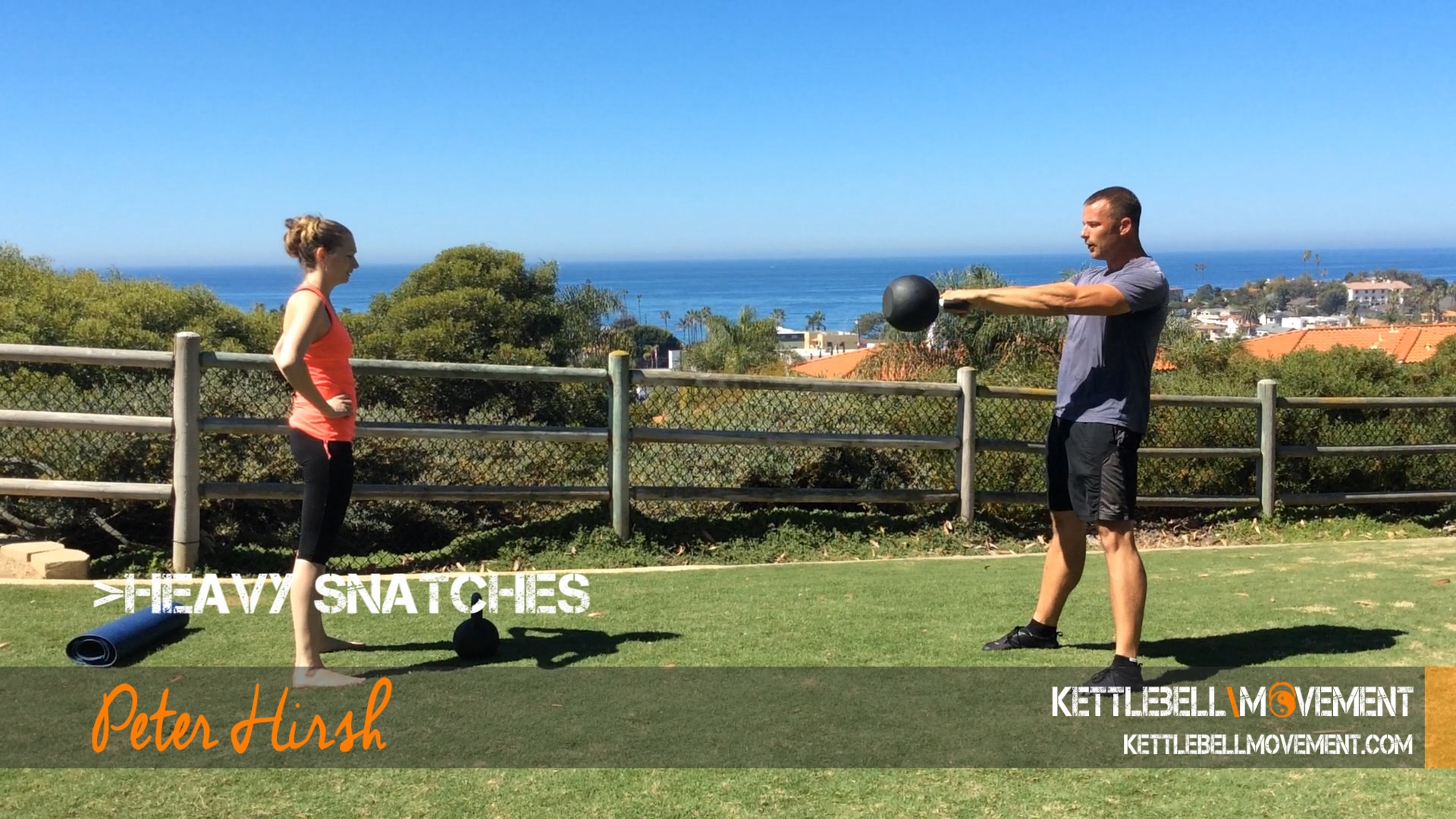
The bruises are another issue all together, and they come from cleaning or snatching the bell with slightly improper form. In this video, I am demonstating the clean and how to perfrom it properly and minimize banging the wrist. Use the corkscrew technique and follow the cues I provide on keeping the kettlebell close to your body on the way up. Competition style bells can help at first, as they are larger and tend to distribute the weight over a larger area in the rack position than hardstyle bells. I will demonstrate the technique for the snatch in another video soon, so practice up and what you learn will carry over to that lesson.
Until next time,
Peter Hirsh